
Demna explores the intersection of aristocratic sophistication, provocative sensuality, and rebellious individualism in a collection that reshapes Gucci’s vision of modern luxury.
For Spring-Summer 2027, Demna approaches Gucci’s heritage from a fresh perspective, bringing together the discipline of classic tailoring, the elegance of equestrian dressing, and a distinctly unconventional attitude. Presented in Milan on September 25, the collection represents a significant development in his creative direction, offering a broader interpretation of the house’s identity through the lens of contemporary bourgeois culture.
“Bourgeoisie is an attitude,” Demna explained backstage, describing his fascination with the traditions and social codes associated with the upper classes. Rather than reproduce their established aesthetic, he chooses to challenge its conventions. His muse is the rebellious aristocrat, a figure who enjoys the privileges of an exclusive environment but refuses to surrender individuality in exchange for acceptance.
This concept runs throughout the collection, exploring the tension between aspiration and resistance. While some seek entry into privileged circles, others struggle against the expectations imposed by their position. Demna draws on both perspectives, transforming traditional expressions of wealth into a more personal and unconventional vision of luxury.
The setting established the atmosphere before the first looks appeared. Conceived as a preview of Gucci’s future retail environment, the expansive venue featured elegant rooms filled with ready-to-wear, handbags, shoes, and accessories. Outside the glass doors, a staged rainstorm created a cinematic backdrop, contrasting the polished interior with the everyday world beyond it. The installation reflected the magnetic appeal of luxury shopping, where exclusivity and desire remain central to the experience.
After the menswear presentation, the womenswear collection introduced an aristocratic aesthetic through equestrian-inspired ensembles. Close-fitting jodhpurs, structured shirts with elevated collars, and riding boots recalled the traditions of country-estate dressing. Yet the addition of delicate stiletto heels disrupted these familiar references, giving the looks a sharper, more contemporary edge.
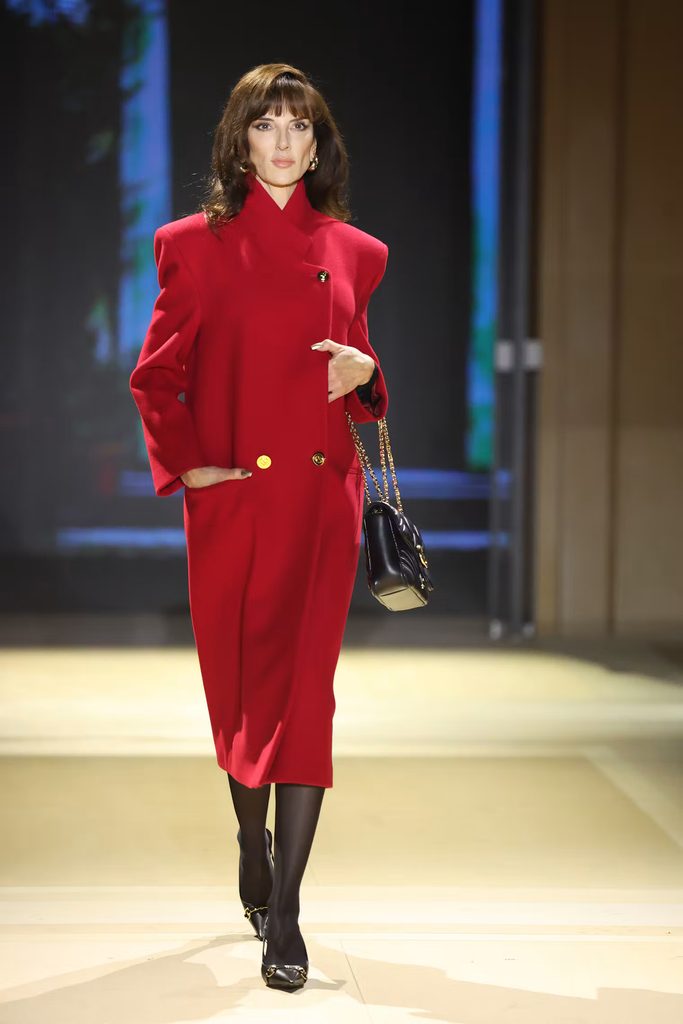
Country-club shirtdresses and trench coats continued the exploration of bourgeois style. Oversized sunglasses and substantial gold jewelry completed the ensembles, worn by mature models whose assured presence brought depth and character to the runway. These women embodied a sophisticated approach to dressing that rejects restrictive ideas about age, presenting elegance as a matter of confidence rather than convention.
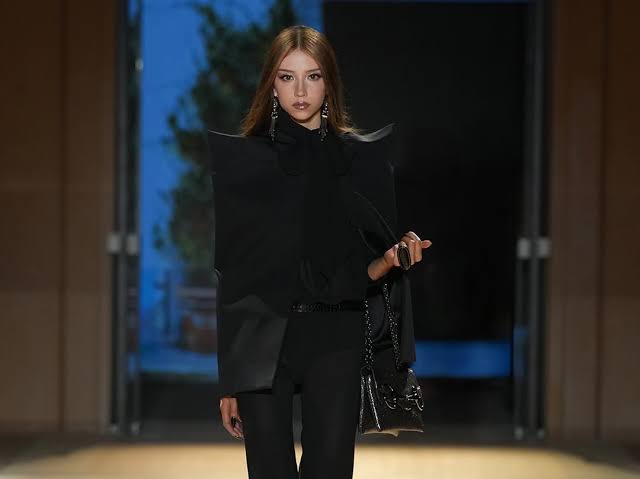
Tailoring introduced a more architectural dimension. Demna reinterpreted traditional suiting through elongated proportions, dramatic collars, and sculptural pagoda shoulders. By eliminating shoulder pads, he created jackets that retained their distinctive structure while feeling lighter on the body. Slim trousers, capri pants, and pencil skirts reinforced the streamlined silhouette, offering a contemporary alternative to conventional power dressing.
The mood shifted as the designer combined familiar wardrobe essentials with unexpected proportions and statement accessories. Rugby shirts appeared alongside pleated tartan skirts, while rounded bomber jackets provided a contrasting sense of volume. Oversized belts featuring Gucci’s recognizable horsebit motif, paired with layers of jewelry, introduced a deliberate extravagance that distinguished the looks from traditional preppy dressing.
One of Demna’s central inspirations was an aristocratic schoolgirl who resents the elite institution she attends. This character captures the collection’s underlying spirit of rebellion. The references to privileged education and traditional uniforms remain evident, but their meaning changes through styling that challenges the very conventions they represent.
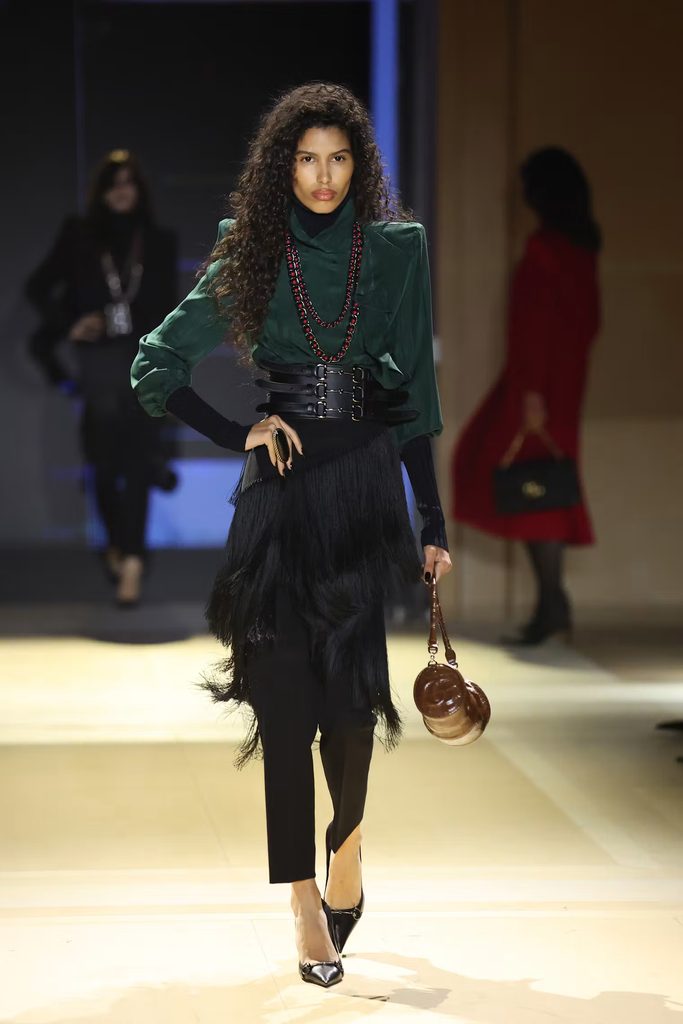
Eveningwear brought the presentation into a more overtly glamorous territory. Alex Consani, Anok Yai, Candice Swanepoel, and Rosie Huntington-Whiteley appeared in sensual designs that emphasized the body while concealing complex construction beneath seemingly effortless silhouettes. The result reflected Gucci’s enduring relationship with glamour, balancing seductive appeal with technical precision.
The closing look distilled this approach into a study of delicate construction. A pink-beige dress draped across one shoulder, appearing almost weightless against the model’s body. At the back, a silver embellishment resembling a droplet anchored the fabric, creating a striking effect through the interplay of gravity, movement, and carefully controlled draping. The design demonstrated how restraint can be just as compelling as elaborate ornamentation.
The collection also illustrates the evolution of Demna’s creative vision since his arrival at Gucci. His earlier film, The Tiger, explored the house’s flamboyant personalities and expressive heritage. Fall 2026 emphasized body-conscious silhouettes and sensuality, while the Resort 2027 presentation in New York examined the idea of a complete Gucci wardrobe, extending the brand’s identity into everyday life.
For Spring-Summer 2027, these explorations come together in a more comprehensive direction. Traditional elegance, contemporary practicality, sensuality, and eccentricity coexist without being confined to a single aesthetic formula.
Rather than distancing himself from Gucci’s history, Demna treats it as a starting point for reinterpretation. His collection suggests that refinement does not require conformity, that privilege can become a source of rebellion, and that established traditions can be transformed through a different attitude.
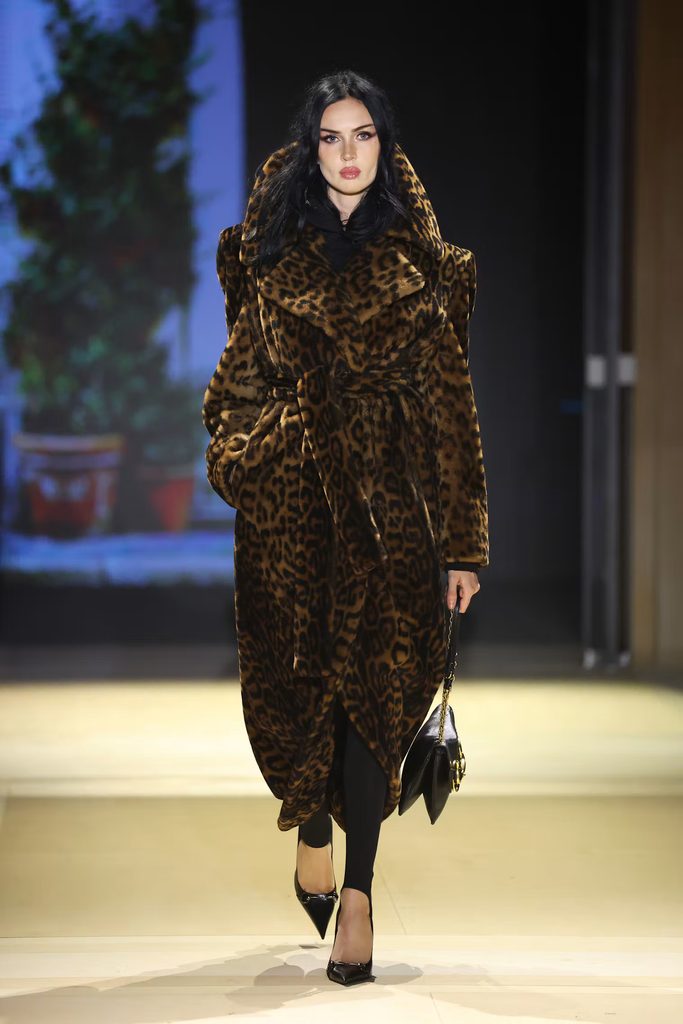
Ultimately, Gucci Spring-Summer 2027 presents a vision of luxury that extends beyond status and material wealth. Through distinctive silhouettes, unexpected combinations, and carefully considered details, Demna positions fashion as a form of personal expression. The result is a Gucci that remains connected to its heritage while embracing a more individualistic, provocative, and contemporary identity.