
New York Fashion Week offered a broad look at where American fashion is heading for Spring/Summer 2027, bringing together established fashion houses, returning names, and emerging designers across the city. From understated tailoring to high-impact eveningwear,
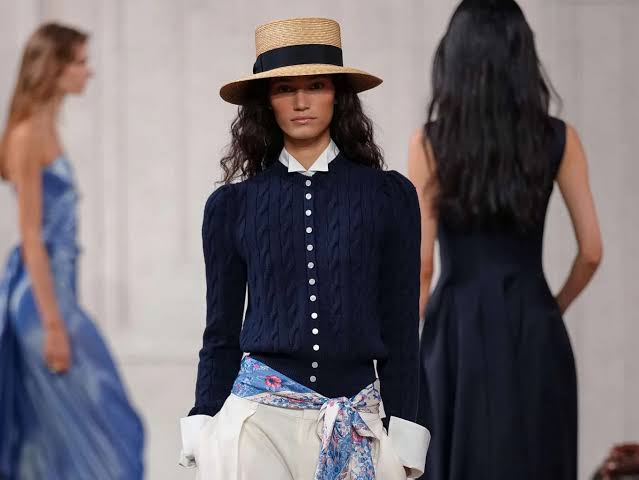
With September traditionally marking the beginning of a new fashion season, designers used the moment to rethink familiar ideas rather than simply repeat them. Classic sportswear was elevated with intricate finishes, tailoring took on looser proportions, and recognizable American references were refreshed through bold styling, unusual textures, and unexpected silhouettes.
The week featured a compelling mix of established labels and younger voices. Rachel Comey, Cult Gaia, and Coach explored new interpretations of contemporary sportswear, while Coach also celebrated its 85th anniversary by looking back at its heritage and giving its signature aesthetic a modern update.
Another notable moment came from Diane von Furstenberg, which returned to the New York Fashion Week schedule after an extended absence. The presentation introduced a new chapter for the house, with Henry Zankov showing his first collection as creative director.
Elsewhere, designers including Daniella Kallmeyer, Anna Sui, Kate Barton, Sandy Liang, and Rachel Scott of Proenza Schouler presented distinctly different visions of modern femininity. Some leaned into romance and playfulness, while others favored sharper tailoring and more refined silhouettes.
Glamour also remained a major part of the New York schedule. Carolina Herrera, Thom Browne, Jonathan Simkhai, and Michael Kors explored sophisticated evening dressing, while a younger group of designers—including Terrence Zhou, Jane Wade, Christian Juul Nielsen, and Lorena Pipenco—experimented with sculptural forms, unexpected materials, and exaggerated proportions.
What makes New York particularly compelling is this stylistic variety. The city has never been limited to one fashion language, and Spring 2027 continued that tradition by bringing together practicality, fantasy, nostalgia, and innovation.
Four collections in particular captured the season’s contrasting moods: Ralph Lauren, Tommy Hilfiger, Tory Burch, and Calvin Klein.
Ralph Lauren
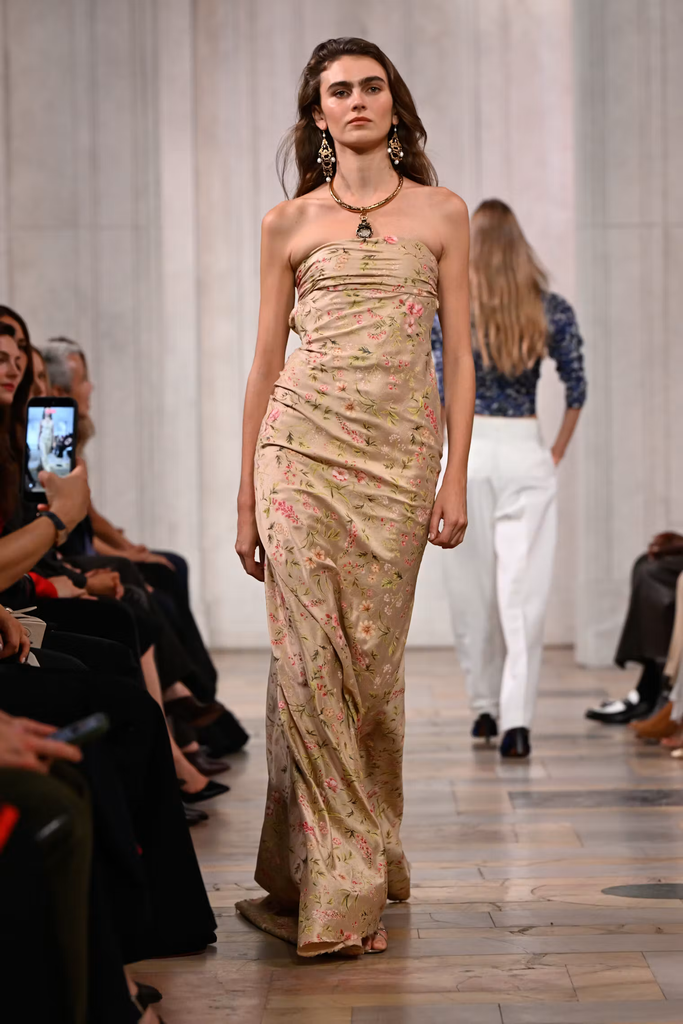
Ralph Lauren once again explored the meeting point between classic Americana and old-school glamour for Spring/Summer 2027.
The collection revolved around romance, individuality, and a slightly rebellious attitude. Traditional Lauren staples—including tailored trousers, structured jackets, and polished outerwear—were combined with more extravagant pieces that brought drama to the runway.
Beaded tops and fringe details introduced a 1920s-inspired feel, while flowing silk skirts caught the light with a golden, liquid-like finish. Denim was transformed with elaborate jacquard treatments, and fur stoles added another layer of vintage sophistication.
Yet the collection never felt excessively formal. Lauren’s signature sense of ease remained present throughout, allowing the more elaborate pieces to retain a relaxed quality.
It was a familiar Ralph Lauren formula, but one that continued to feel relevant: timeless American dressing elevated through luxury, romance, and imagination.
Tommy Hilfiger
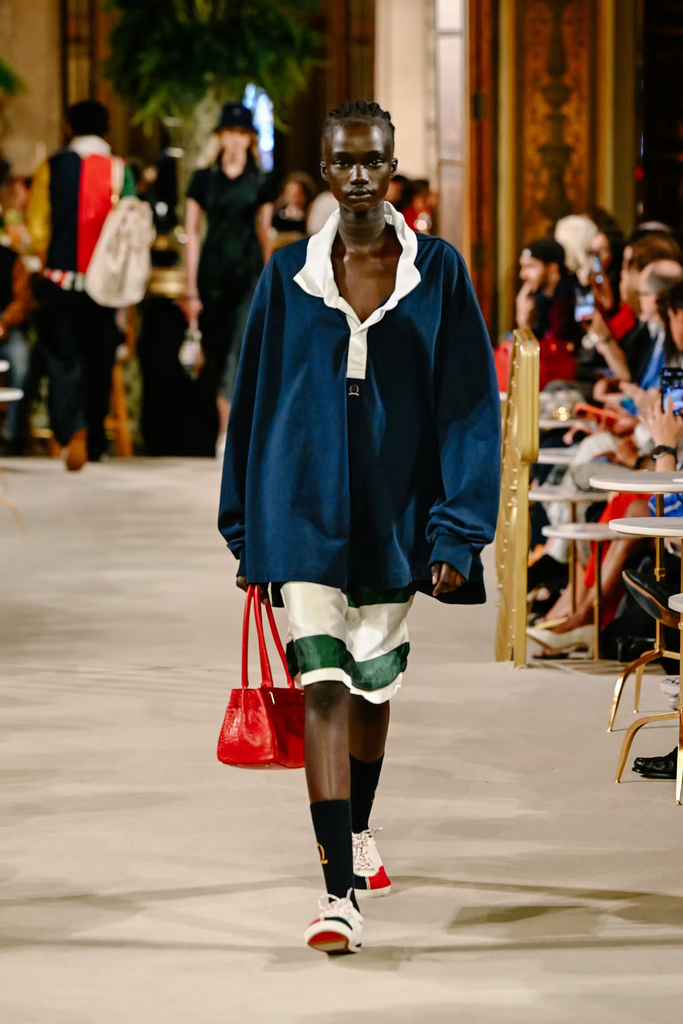
Tommy Hilfiger returned to New York Fashion Week with a collection presented at The Plaza, placing his latest interpretation of American style in one of the city’s most iconic settings.
The collection drew heavily from classic prep, but the proportions were anything but traditional. Oversized blazers, relaxed trousers, and loose tailoring created a casual, borrowed-from-the-boys attitude.
Sport-inspired colors injected energy into the lineup, while fitted knit dresses offered a more body-conscious alternative to the collection’s generous silhouettes. The contrast helped keep the presentation dynamic without losing its central aesthetic.
Hilfiger’s approach demonstrated how prep can evolve without losing its identity. By exaggerating proportions and loosening the traditional uniform, he gave familiar American staples a distinctly contemporary edge.
The result was polished, youthful, and effortlessly tied to the spirit of New York.
Tory Burch
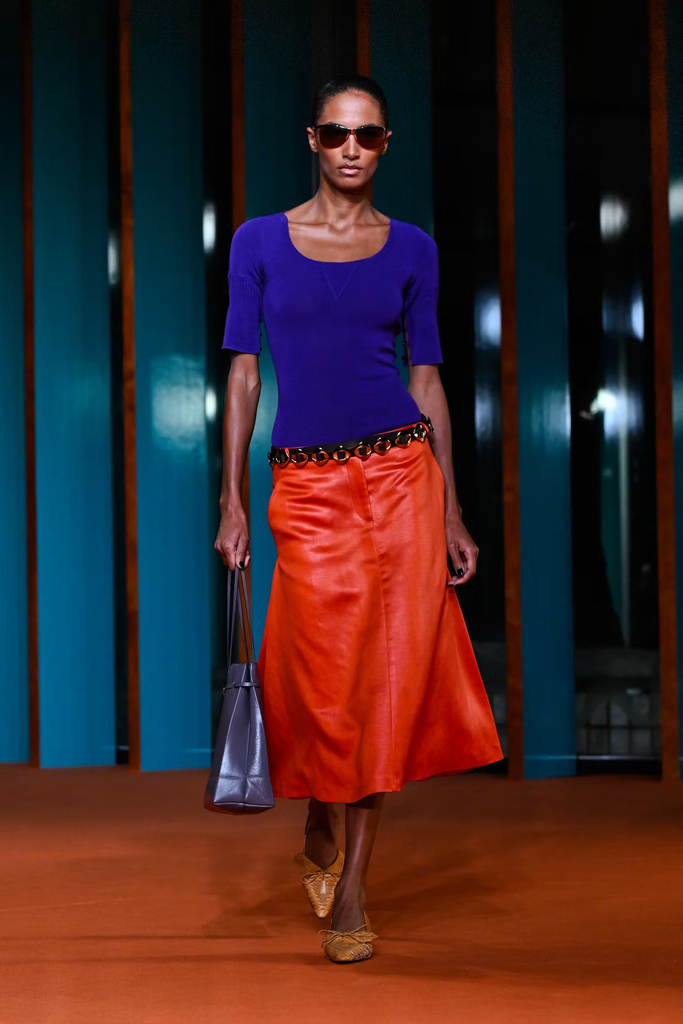
Tory Burch approached Spring 2027 with a lighter, more playful vision, combining practical silhouettes with decorative touches that gave everyday pieces a more luxurious character.
Embellished cardigans, structured garments finished with statement chains, and jewel-toned pieces decorated with floral-inspired details brought color and personality to the collection.
Rather than treating femininity as something overly polished or restrained, Burch embraced a more spontaneous approach. Texture, ornamentation, and unexpected combinations gave the clothes an expressive quality while maintaining their wearability.
The collection found strength in that balance. Familiar wardrobe staples were made more distinctive through intricate details, suggesting that practicality and fantasy do not have to exist at opposite ends of the fashion spectrum.
For Burch, getting dressed became a celebration—an opportunity to experiment, have fun, and add a little extravagance to the everyday.
Calvin Klein
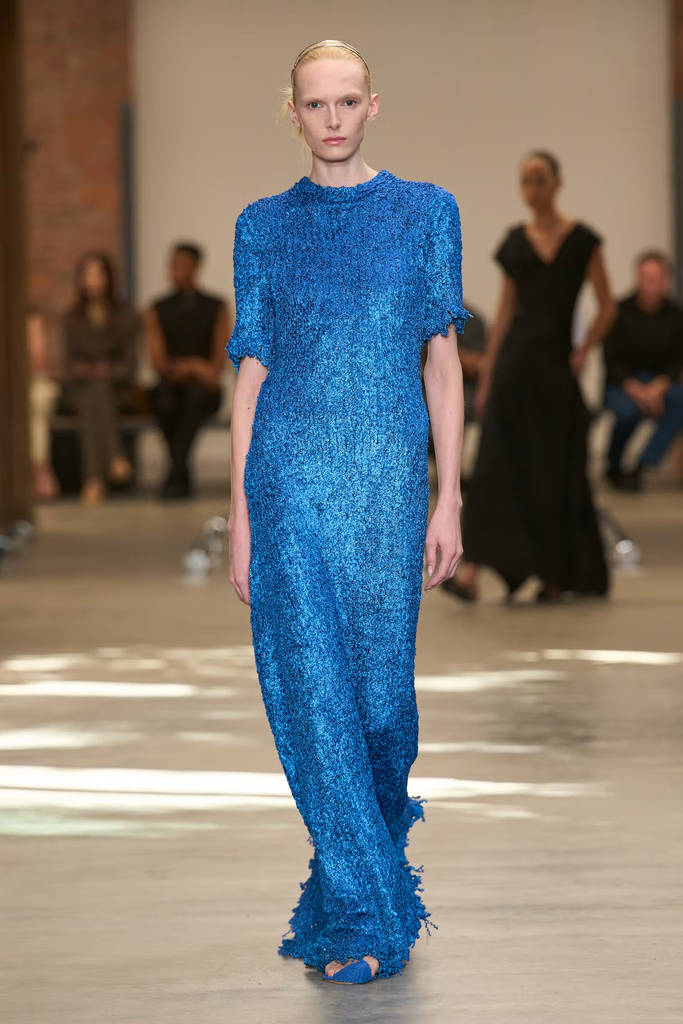
At Calvin Klein, Veronica Leoni presented perhaps the most restrained collection of the four, returning to the label’s minimalist DNA for Spring/Summer 2027.
The collection drew inspiration from the sleek sophistication of the 1990s, with streamlined silhouettes and precise tailoring recalling the understated glamour associated with Carolyn Bessette-Kennedy.
There was little need for excessive decoration. Instead, Leoni focused on construction, proportion, and the relationship between the body and the clothes. Clean shapes and carefully considered fabrics allowed the garments to make an impact through simplicity.
That restraint stood out against a season filled with embellishment and exaggerated styling. Calvin Klein demonstrated that minimalism can still feel modern and powerful when the cut and construction are allowed to take center stage.
Together, Ralph Lauren, Tommy Hilfiger, Tory Burch, and Calvin Klein illustrated four very different sides of American fashion. One looked to romantic Americana, another reinvented prep, another celebrated playful femininity, while Calvin Klein returned to sophisticated minimalism.
Their contrasting approaches reflect what continues to make New York Fashion Week so distinctive. There is space for heritage and experimentation, glamour and practicality, nostalgia and modernity.
For Spring/Summer 2027, New York once again proved that its greatest strength may be its refusal to be defined by just one aesthetic.