
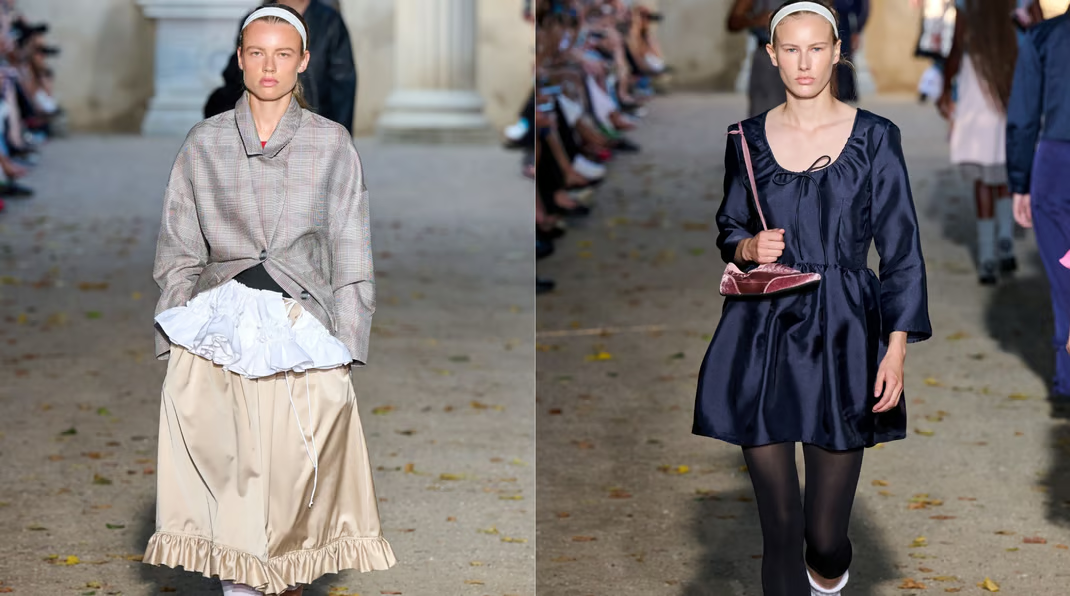
Copenhagen Fashion Week returns for Spring 2027 with a milestone season celebrating two decades of the Danish capital’s growing presence on the international fashion scene. Taking place from August 3 to August 7, this year’s edition features more than 34 runway shows and presentations, bringing together some of Scandinavia’s most established fashion houses with a new generation of emerging designers.
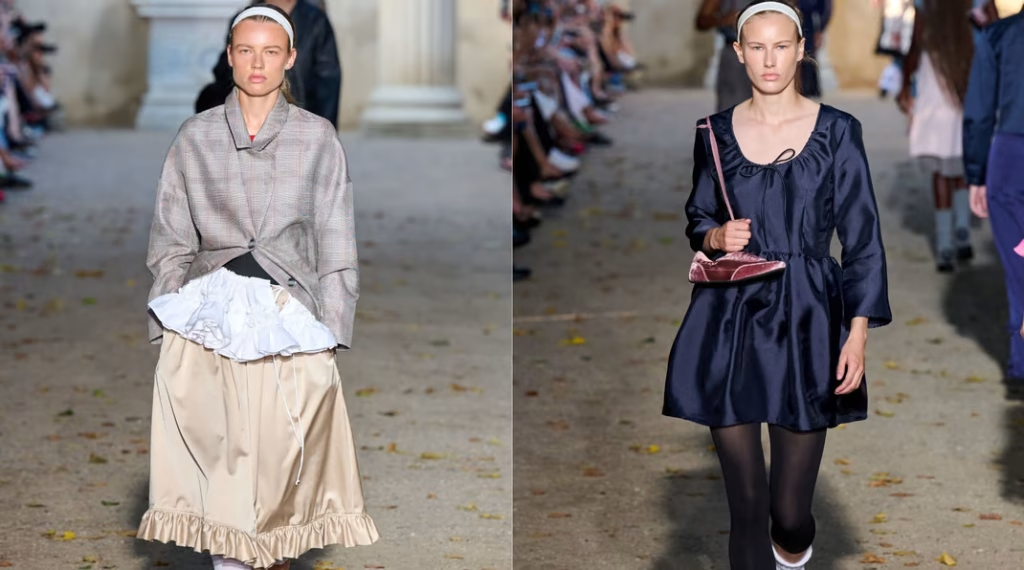
Among the familiar names on the schedule are Henrik Vibskov, Baum und Pferdgarten, and By Malene Birger. The season also welcomes New York-based label Collina Strada as the official International Guest, with designer Hillary Taymour presenting the brand’s SS27 collection in Copenhagen for the first time on August 6.
Elsewhere on the schedule, emerging labels such as Stem, Taus, and Renè are introducing their latest collections, while designers including Anne Sofie Madsen and CPHFW New Talent alum Nicklas Skovgaard return to the Copenhagen calendar.
With the city once again becoming a meeting point for established names and rising talent, these five collections offer a glimpse into the diverse aesthetic shaping Copenhagen fashion for Spring 2027.
Collina Strada
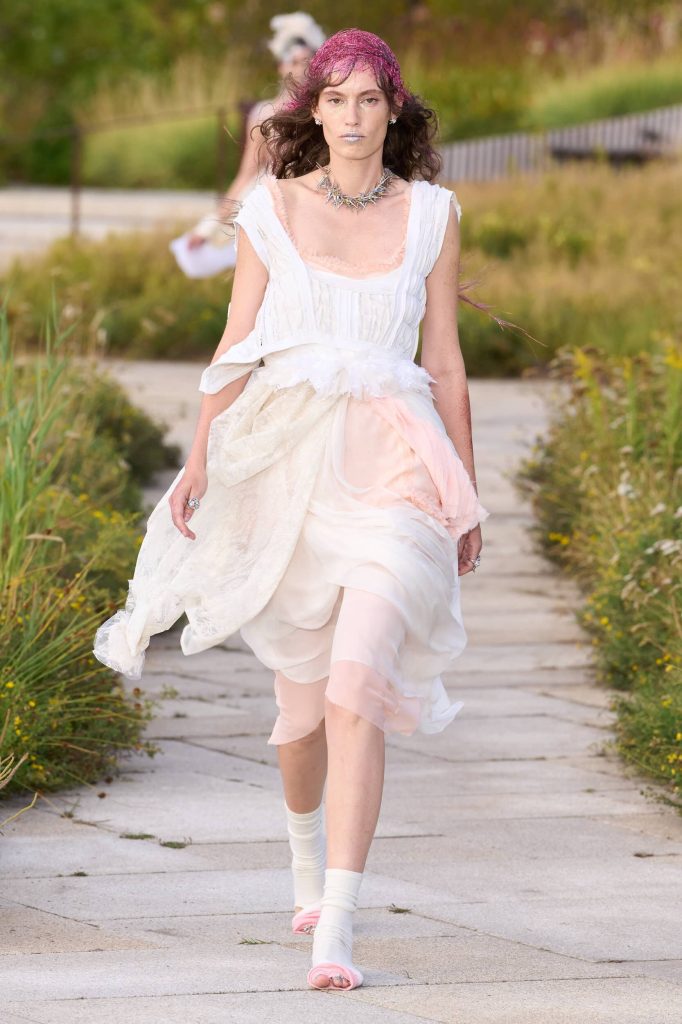
Collina Strada brought its distinctive New York energy to Copenhagen as this season’s International Guest, presenting its SS27 collection in a theatrical setting accompanied by violinists and the unpredictable atmosphere of the Danish outdoors.
The collection reflected designer Hillary Taymour’s signature combination of experimentation, romance, and irreverence. Oversized ruffles, metallic surfaces, asymmetric shapes, and layers of gathered fabric created dramatic silhouettes with plenty of movement.
Bridal influences appeared throughout the collection, introducing a softer dimension to the label’s more unconventional designs. Elizabethan-inspired beauty looks added another layer of theatricality, placing historical references alongside distinctly modern garments.
Much of the collection’s appeal came from its contrasts. Romantic details were juxtaposed with unexpected proportions, while elegant finishes were interrupted by more unconventional styling.
The result was expressive, playful, and theatrical—a strong Copenhagen debut for a label that continues to question traditional ideas of beauty and fashion.
By Malene Birger
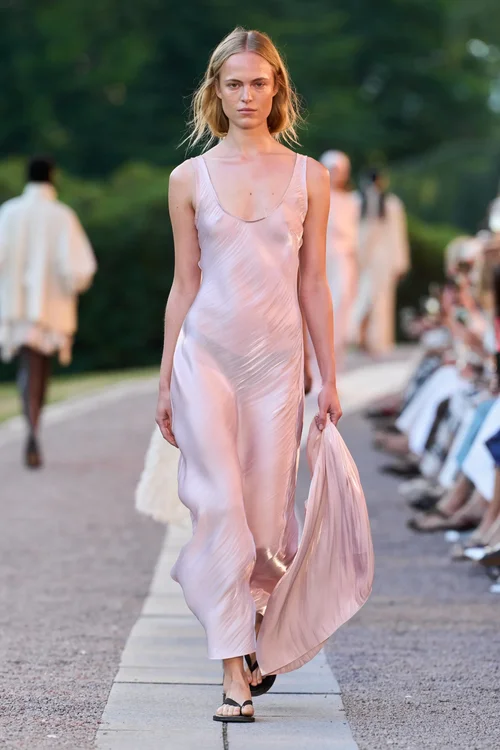
Spring 2027 marked the return of By Malene Birger to the runway after six years away. To make the occasion even more meaningful, creative director Emilie Martinsen-Kønigsfeld chose to present the collection in the gardens of her parents’ home just outside Copenhagen.
The location reinforced the collection’s central idea of homecoming, transforming the runway return into a reflection on the house’s history and identity.
The collection appeared to follow the changing mood of a single day. Crisp whites and understated neutrals opened the presentation before giving way to warm golds and, eventually, deep black evening looks. Sun motifs and decorative details echoed the progression, while the soundtrack mirrored the changing quality of daylight.
The clothes themselves were defined by relaxed sophistication. Fluid dresses, loose tailoring, softly draped separates, and lightweight outerwear created a wardrobe that felt cohesive and effortless.
Several details referenced the brand’s heritage without leaning too heavily into nostalgia. A high-neck raincoat with a dramatic tassel, backless tops inspired by scarves, and reflective embroidery subtly recalled previous chapters of the house.
The collection also looked toward the glamour of the 1990s, particularly through sheer evening dresses reminiscent of the decade’s supermodel aesthetic. Their relaxed styling, however, kept the references firmly rooted in the present.
By Malene Birger ultimately found a compelling middle ground between heritage and modernity, revisiting familiar codes while giving them a distinctly contemporary Scandinavian interpretation.
Henrik Vibskov
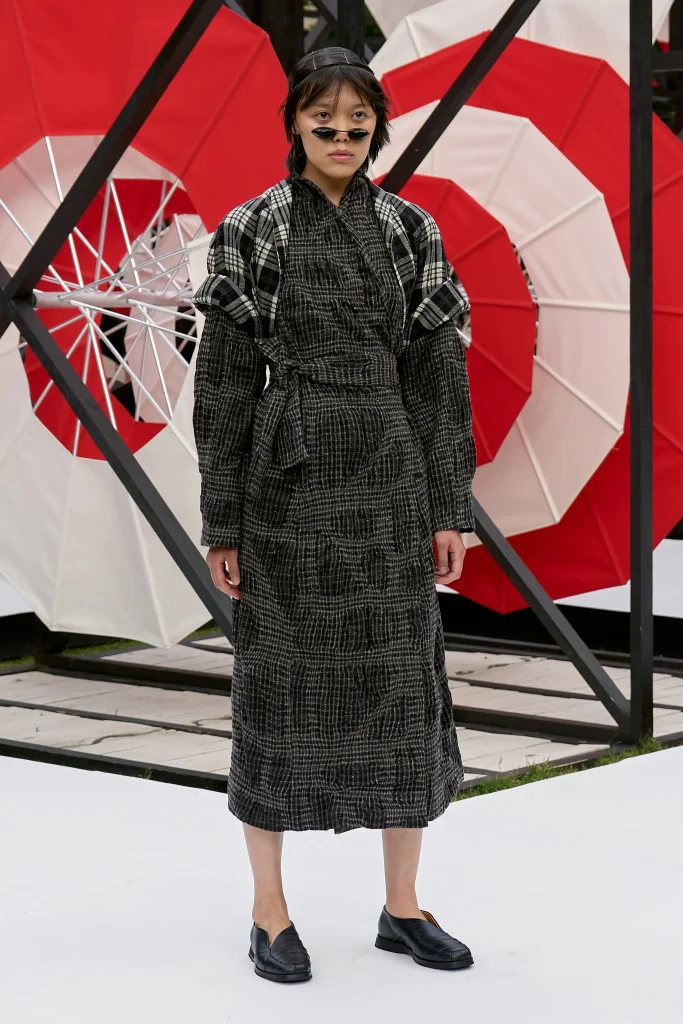
Henrik Vibskov once again embraced experimentation for Spring 2027, turning the runway into a playground for unusual proportions, textures, construction techniques, and silhouettes.
Oversized garments were contrasted with more fitted pieces, creating dramatic changes in scale throughout the collection. Sculptural shapes and unconventional constructions gave the looks an artistic quality, while graphic details and playful accessories added an energetic finish.
Despite its conceptual character, the collection remained surprisingly wearable. Many of the individual garments could be separated from the more elaborate runway styling and incorporated into an everyday wardrobe.
That combination of experimentation and practicality remains one of Vibskov’s defining strengths. His designs challenge conventional ideas about proportion and dressing without becoming completely detached from functionality.
For Spring 2027, the designer once again translated Copenhagen’s experimental creative culture into a collection that felt unmistakably his own.
Baum und Pferdgarten
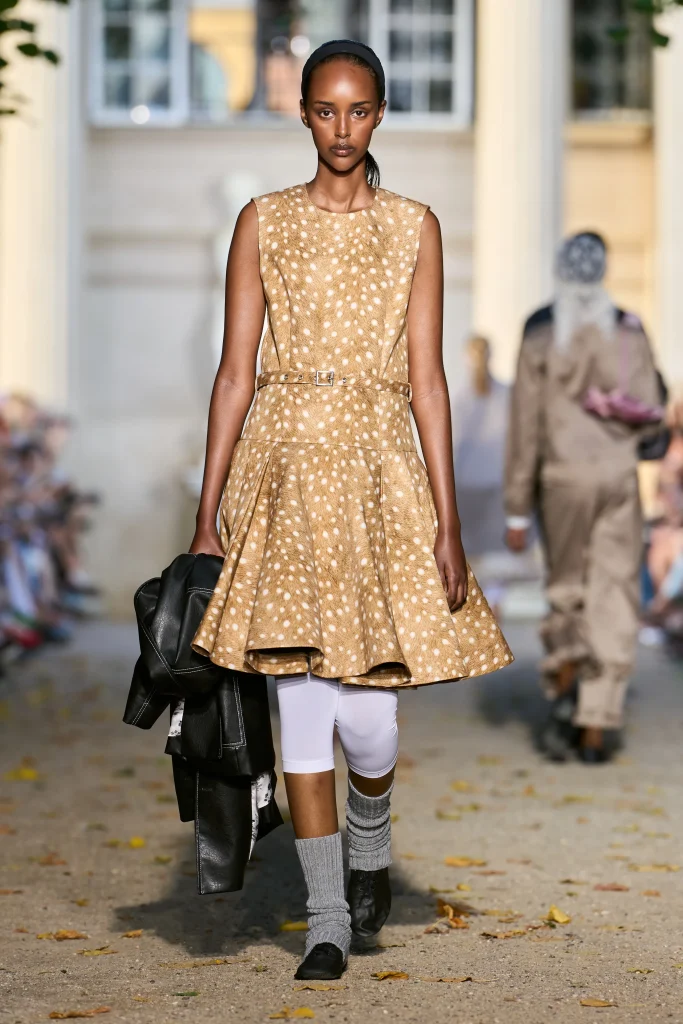
Baum und Pferdgarten approached Spring 2027 through a playful exploration of contemporary femininity, bringing together structured tailoring, relaxed shapes, expressive patterns, and unexpected styling combinations.
The collection moved freely between tailored jackets and trousers, romantic dresses, fluid fabrics, and casual separates. Bold prints and contrasting textures gave the looks a sense of energy, while unusual combinations kept the styling fresh.
Rather than presenting femininity through one particular aesthetic, the label explored several different interpretations. Sharper silhouettes communicated confidence and structure, while softer materials and flowing shapes introduced a more relaxed sensibility.
Versatility was another defining feature. Many of the pieces felt naturally suited to life beyond the runway, with styling options ranging from casual everyday dressing to more polished occasions.
The collection captured one of Baum und Pferdgarten’s most recognizable qualities: an ability to make fashion feel expressive and playful while retaining a strong sense of practicality.
Stem
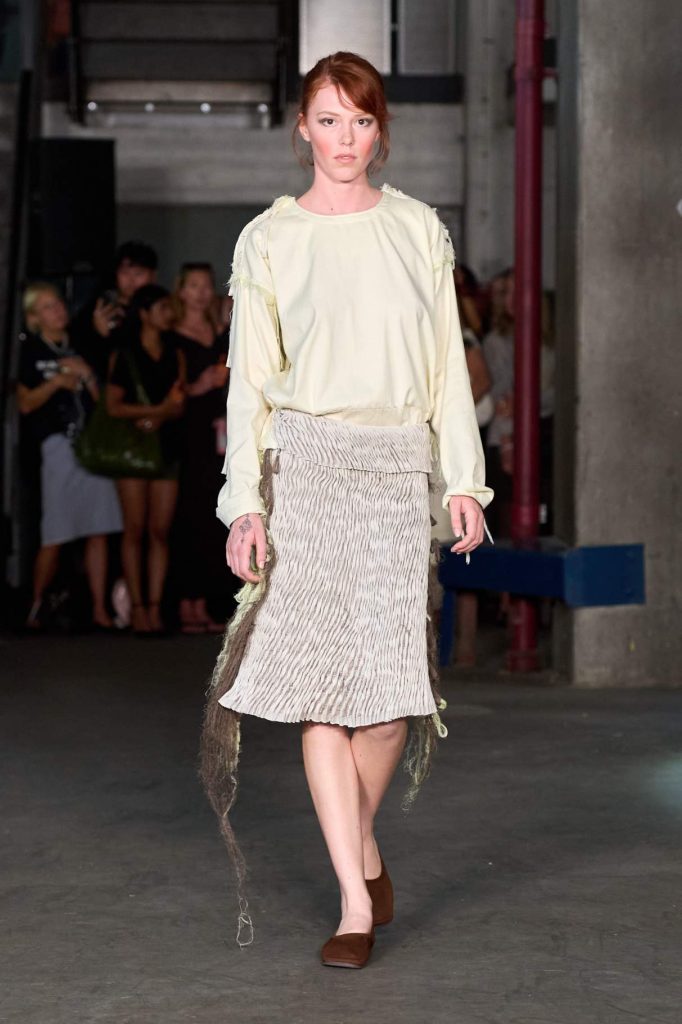
Stem was among the emerging labels bringing a fresh perspective to Copenhagen’s Spring 2027 schedule. The collection explored a restrained but contemporary approach to Scandinavian fashion, focusing on precise construction, fluid silhouettes, subtle detailing, and carefully chosen materials.
Rather than using elaborate embellishment, Stem relied on the relationship between fabric, proportion, and cut to create visual interest. At first glance, the looks appeared minimal, but closer attention revealed unexpected shapes and nuanced styling choices.
The collection reflects a broader evolution within Scandinavian fashion. For a new generation of designers, Nordic minimalism is becoming less of a rigid aesthetic and more of a starting point for experimentation.
Stem’s approach felt youthful without being immature and understated without becoming predictable. Its Spring 2027 collection suggested a label with the potential to become an increasingly visible part of Copenhagen’s next fashion generation.